| Gretel looking suitably impressed |
Wednesday, 13 April 2016
Carcossnne
The castle at Carcassonne is said to have been the inspiration for Sleeping Beauty. It is the second most visited building in France, behind the Eiffel Tower, and it felt like it. It did have a fantastic moat and drawbridge though.
Friday, 8 April 2016
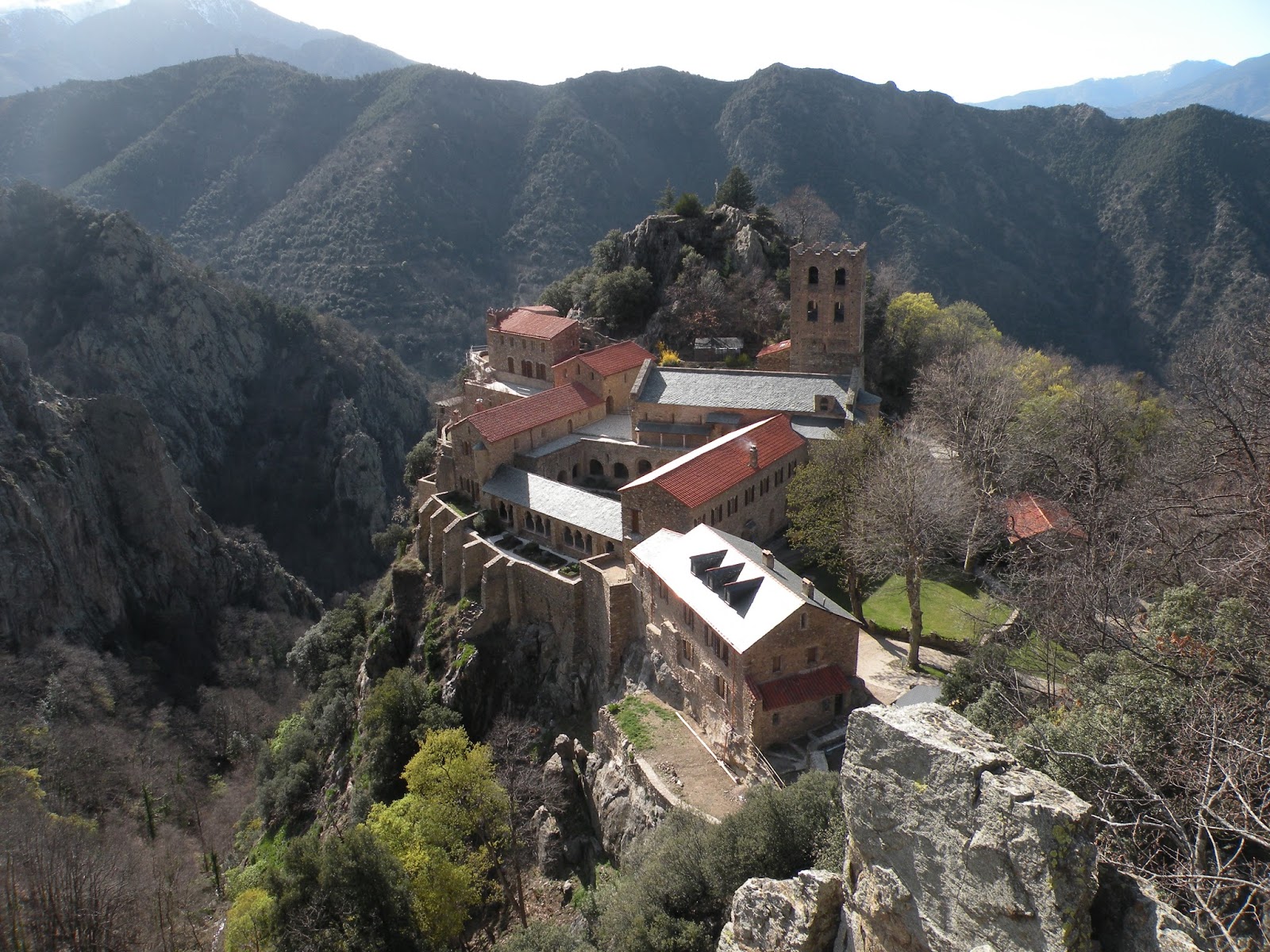
Pyrenees
| The Pyrenees looking remarkedly like our Southern Alps with trees |
![]() |
| Getting a feel for the snow |
| The Pyrenees surprised us with their warmth and the extent and variety of vegetation. |
| The Pyrenees at sea level. A view of the border between France and Spain. |
| Our motorhome exiting St Mont Louis. |
| Enjoying a thermal pool within the Pyrenees |
![]() |
| Guess whose these feet belong to? |
The mountains were very like our Southern Alps, although did not have the aroma our beech forests provide. They also had extensive trees which in part grew right to the ridge lines.
Costa Brava
The Costa Brava would make a fantastic holiday location, a combination of beautiful beaches, rugged coastline, historical sites and tacky resorts; all with the advantage of the cheap living Spain provides and proximity to the Pyrenees and the south of France.
| The beach at St Felix |
| Sea life adds interest to the swimming |
| Starboard - 3 of 80 optimists battling it out in a charity regatta |
| Smile |
| Traditional fishing boat passing the heads |
Sunday, 3 April 2016
Barcelona
Barcelona has overtaken Porto and Seville as the most interesting city we have visited. It radiates a strong Catalan sense of pride, and a contrast between the wide pedestrian friendly streets and the narrow Jewish centre lanes and alleys.
The architecture is outstanding. Extensive wrought iron Balconies on masonary buildings sitting side by side with the unorthodox Gaudi inspired creations. And it has an attractive beach as well.
![]() |
| Gaudi's cathedral, started 134 years ago, still under construction. Not to everbody's taste; a bit like an organic fungus. |
![]() |
| Flamenco dancer in action. |
![]() |
| Jewish quarter lanes |
![]() |
| More Gaudi |
| Lladro china (for Kirsten). |
| And even more Gaudi. |
![]() |
| Juxtaposition between Gaudi and traditional |
| Barcelona is a very pedestrian friendly city. |
![]() |
| This is not a building facade, but rather a decorated tarpaulin covering a building under construction. |
| Wrought iron balconies decorated many buildings within central Barcelona. |
Central Spain
Central Spain surprised us with the variety of the landscapes. We climbed from sea level to over 1400 metres, from 25 degrees to 5 degrees, and from oranges to snow. Some of the villages were poor and appeared virtually uninhabitated, others were prosperous. The high plateau, far from being a desolate landscape, was very agricultural, with crops such as lucerne and wheat growing - even at the highest altitudes.
The Spanish make much use of renewable power sources. We have only seen one nuclear power station, yet wind power turbines and solar panels are very common. Unlike New Zealand thet have no compunction about installing wind turbines on very prominent ridges. Their solar panel 'farms' are sophisticated, with the solar panels rotating to maintain an optimum angle to the sun.
| Red soils were a feature of the Spanish plateau. |
| We hit snow. |
| A camouflaged village. |
| Wind turbines dominate ridge lines within Spain. |
Friday, 1 April 2016
Belchite
Belchite (pronounced Bellsheetay) is located approximately halfway between Madrid and Barcelona. When
planing our trip it was the first 'must see' that we penciled in. The
town was far more sobering than we envisaged.
Belchite is a memorial to the Spanish civil war. At the commencement of the uprising the province of Aragon decided to join the Nationalists (Franco). About 200 people in Belchite, who were known Republicans, were shot.
On the 24th August, 1937 the battle of Belchite began as the Republican army launched a major offensive, supported by the International Brigade (including a New Zealander - Bill Belcher), and Soviet tanks. The siege of Belchite lasted for 13 days. There were 6000 Nationalist troops defending the town, over 4000 of them perished under the onslaught. The town was taken street by street; house by house, as the design of the town did not allow armoured vehicles to enter. Fatalities amoungst civilians and Republicans were also extreme.
In March, 1938 the town was recaptured by Franco with the help of German bombers.
![]() |
| Add caption |
![]() |
| A cross made by Prisoners and erected on the site where hundreds of dead bodies were piled up and burnt. |
| The remains of San (St) Martins church |
| A view across part of the town |
| Tank shell holes, not windows |
| Desolation |
![]() |
| An example of a basement. The majority of the town had tunnels running under it. These tunnels were home to the civilians during the siege. |
| Bullet holes/marks cover all the walls that remain standing. |
![]() |
| Red cloths were tied to the outside of buildings when it was conformed that no more Nationalist soldiers remained inside. |
| The entrance to High street. |
![]() |
| The interior of the main chapel. |
Subscribe to:
Posts (Atom)