Thursday, 16 June 2016

Ladenburg, Germany

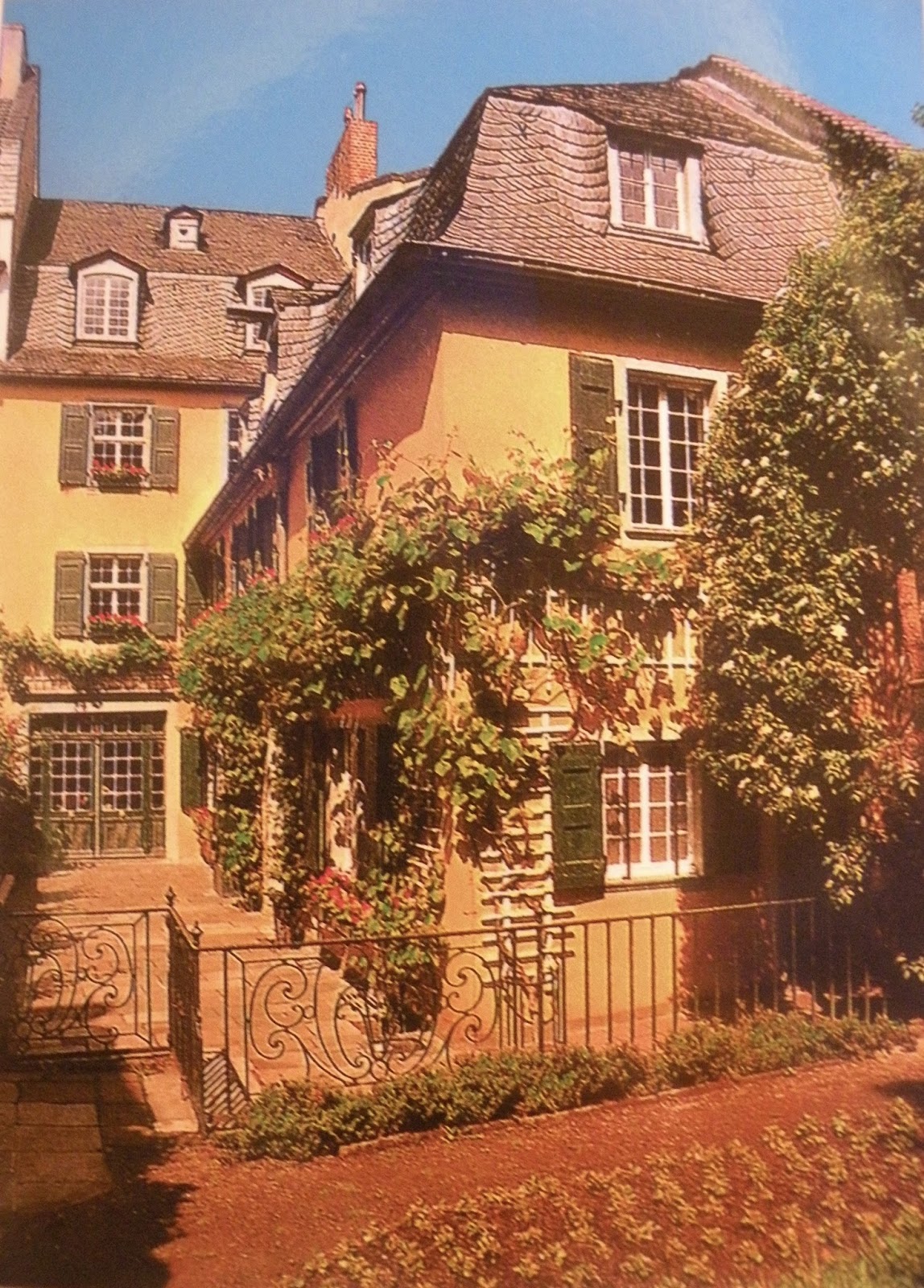
Ladenburg is the village where Carl Benz produced the first of his cars in 1908; it is also a village of immense beauty with a high ratio of bakeries to clothing shops, exactly the sort of village tony is at home in.

The original factory, now a museum.

This one didn't last as well as some others.


The buildings within the village date back to 1500.

Sunday, 12 June 2016

Luxembourg

We strayed into Luxembourg and regretted it almost as soon as we arrived. Big Bertha got stuck in the mud, or to be more specific half stuck in the mud. The drivers side wheels were so deep that cups refused to remain on the bench.

Tony is unsure why the gravity should exhort a stronger force on the drivers side of the van. Gretel thinks it may be in direct proportion to the amount of German food that is being consumed on his side of the van. After an uncomfortable night, where Gretel continually rolled on to Tony's side of the bed, we were towed out and made our escape from Luxembourg.


For those that are interested people from Luxembourg are called Luxemburgers and speak their own language which is a mixture of German, French and Dutch.

Wednesday, 8 June 2016

Mosel valley

Compared to the Rhine, the Mosel valley seemed far more relaxed. It lacked the number of castles, the extent of boats on the river, the number of tourists and the trains the run incessantly along each side of the Rhine. We were told it was much clearer but this did not prove to be the case, possibly because of the flooding we have experienced.

These campers must have been getting a bit nervous.

Another quaint church. Not far to go to source the communion wine.


Germans are busy people. Often too busy to return a greeting or a smile, but very good at maintaining their buildings and constructing new structures. Cranes and road works are encountered frequently. This column is part of an over-bridge spanning 1.7 km and having a height of 158m.

The Rhine valley

A view of the confluence of the Rhine and Nahe rivers at Bingen.
The remaining two spans of the Hindenburg bridge. This bridge, spanning the Rhine between Bingen and Rudesheim, was the subject of several Allied bombing raids. Ironically the bridge was eventually blown up by the Germans in 1945, as they attempted so slow the advance of American soldiers.

German architecture is very appealing and their buildings and gardens exceedingly well maintained.


The world's smallest chapel?

Gretel has not gone loopy (yet). She is listening to sap running within a silver birch tree.

The Rhine valley features a lot of grape vines and the river is busy with traffic. Note how dirty the Rhine is, with a lot of rain in recent days.

Sunday, 5 June 2016


 We visited Bonn, the former capital of West Germany, on a Sunday to avoid all the traffic. In this we were successful, but we were less successful in avoiding the air pollution. A blue haze coated the city and surrounding farmland. Perhaps it was enhanced by the lack of wind in Germany over the last week.

Bonn is a tidy very green (and blue) city with a blend of modern and historic architecture. Our prime reason for visiting was to see Beethoven's museum, located in the house of his birth. Gretel was not disappointed. The instruments and sheet music, together with an informative commentary made for a most memorable experience.

Fortuitously, we were also treated to an outdoor orchestral music concert. The video at the top of this page was serendipitously shot by 'techno tony', who thought he was taking a photograph, but when downloading his photos discovered his camera took videos.

Incredible to think that the 'Moonlight Sonata' may have been composed on this piano

The rear of Beethoven's family home. The home fronts onto a commercial street near the centre of Bonn. He was born in the room visible at the top of this picture.

A statue of Beethoven in the main square of Bonn, presented to the city on his 75th birthday. About 20,000 people attended his funeral.

The main cathedral in Bonn. Germans built cathedrals like they build cars today, with a sense of durability and style. Their cathedrals are much lighter inside than the rather imposing buildings in the rest of southern Europe.

Who burnt the sausages? Bonn was surrounded by a purple haze.

Strasboug

Separated from Germany by the Rhine river, Strasbourg has had a turbulent history. In 1349, during the Dark Ages, over 1000 Jews were burnt at the stake.

It was fought over frequently between France and Germany, with the most recent German governance ending at the end of World War 1. At the beginning of World War 2 the entire population of 120,000 people was evacuated, and the city sat empty for ten months.


Strasbourg cathedral, at 142 metres high, was the tallest building in the world when it was constructed (now nearly 1000 years old).

Nice cafe, dirty river.

The architecture reflects the best of German and French. The old quarter in particular is a maze of cobbled streets.

Friday, 3 June 2016

Some thoughts on our experiences in France


France (excluding northern France which we will visit later):
Our most memorable experiences:
  1. Patisseres, particularly the strawberry mille feulie we devoured in Brittany.
  2. The Pyrenees
  3. D Day landing sites
  4. Maximun St Baume and associated abbey
  5. The Verdon gorge
  6. Oradour sur Glane memorial village
  7. The architecture of the villages, including the balconies, shutters and flowers.


Favourite villages:
  1. Ansouis, Provence
  2. Lautrec, Dordogne
  3. Moustiers-Ste-Marie, Verdon
  4. Kermouster, Brittany

    Favourite city: Strasbourg - Architecturally an interesting mix of French and German, cobbled streets and great coffee.
The most surprising things:
  1. The beauty of the French countryside.
  2. The friendliness of the people.
  3. The French love of order, this is most evident in the immaculate way they stack their wood.
  4. How many people smoke (NZ is ahead of the ball game).
  5. The number of old people limping with sore hips (health system?).
  6. Lack of any sort of border control.
Most annoying things:
  1. The size and frequency of their judder bars.
  2. Queing in the supermarkets while the only two checkout operators had private conversations with each other.
  3. The lack of steak and cheese pies.
Scariest moment – getting a flat tyre on a motorway with wet weather and a procession of trucks heading to Spain.
Most enjoyable drink – Creme de Cassis (syrup of blackcurrants).
Most useful phrase – Je suis une imbicile, je ne parle Francais.
Greatest realisation – The importance of a common language in binding people together socially.
 
Biggest disappointments:
  1. The Mediterranean coast.
  2. The cheeses.
What we were most grateful for:
  1. The large network of mostly free aires (campsites).
  2. The help given to us when we got a flat tyre on a motorway.
Cost of living:
a. Diesel – 1.10 euro per litre.
b. Wine 3 - 6 euro per bottle
c. Steak 25 – 30 euro per kg


Lasting impression – French people buying white bread sticks and eating them as they went home.


What we missed most – Family and friends, wholegrain bread, peanut butter, marmite (we have run out, Johan please bring some over), steak and cheese pies and school.